.png "euroeconomie (10)")


EU/ENG - On Tuesday, January 27, the European Union and India concluded negotiations for a historic free trade agreement (illustrated in the graph below), which began in 2007, stalled in 2013, and formally resumed in July 2022. Ursula von der Leyen and Antonio Costa flew to New Delhi, welcomed to great media fanfare by Prime Minister Narendra Modi.
The agreement introduces more stable investment rules and consolidates a structural relationship that reduces, for both parties, dependence on partners perceived as increasingly unreliable.
The aim is to create an integrated market of approximately two billion people.
On the economic front, the agreement outlines an integrated market of approximately two billion people, equal to over a quarter of global GDP, and India is set to become the world's third-largest economy (Source: IMF). The European Union aims for more competitive access to a rapidly growing economy, benefiting sectors currently penalized by barriers and high costs—such as automotive, agri-food, wine, and machinery. For India, the agreement strengthens access to the European market in key sectors such as textiles, IT services, pharmaceuticals, and certain agricultural products. The aim is to double the $195 billion in trade in goods and services.
The Partnership on Defense and Security
A Partnership on Defense and Security was also signed, which aims to strengthen military-industrial cooperation, with the possibility of Indian industries participating in European projects.
The EU and India also share a growing interest in maritime security between the Indian Ocean and the Mediterranean. Cooperation in cybersecurity and digital defense also takes on significant political weight.
Now it's the European Parliament's turn.
The European Commission confirms its intention to pursue a de-risking strategy: reducing critical dependencies without completely severing global economic relations.
The agreement signed in India will have to be ratified by the European Parliament and, most likely, by the national parliaments of the member states.
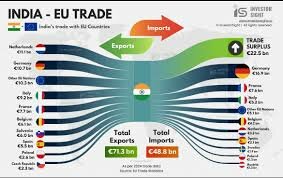
EU/ITA - L’Unione Europea e l’India hanno concluso martedì 27 gennaio, i negoziati per uno storico accordo di libero scambio che erano stati avviati nel 2007, si erano arenati nel 2013 e ripartiti formalmente nel luglio 2022. Ursula Von der Leyen e Antonio Costa sono volati a New Delhi accolti con grande clamore mediatico dal primo ministro Narendra Modi.
L’accordo introduce regole più stabili sugli investimenti e consolida un rapporto strutturale che riduce, per entrambe le parti, la dipendenza da partner percepiti come sempre meno affidabili.
Si punta a un mercato integrato di circa due miliairdi di persone
Sul piano economico, l’intesa delinea un mercato integrato di circa due miliardi di persone, pari a oltre un quarto del PIL mondiale e l’India è destinata a diventare la terza economia mondiale (Fonte FMI). L'Unione europea punta all'accesso più competitivo a un’economia in forte crescita, con benefici per settori oggi penalizzati da barriere e costi elevati – come automotive, agroalimentare, vino e macchinari. Per l’India, l’accordo rafforza l’accesso al mercato europeo in comparti chiave come tessile, servizi informatici, farmaceutico e alcune produzioni agricole. Si punta a raddoppiare i 195 miliardi di dollari di scambi fra beni e servizi.
Il Partenariato su Difesa e Sicurezza
E' stato inoltre firmato anche un Partenariato su Difesa e Sicurezza, che punta a rafforzare la cooperazione industriale militare, con la possibilità che le industrie indiane partecipino a progetti europei
UE e India condividono inoltre un interesse crescente nella sicurezza marittima tra Oceano Indiano e Mediterraneo. Anche la cooperazione in cybersecurity e difesa digitale assume un peso politico rilevante.
Ora tocca al Parlamento europeo
La Commissione europea conferma di voler perseguire una strategia di de-risking: ridurre le dipendenze critiche senza arrivare a una rottura totale delle relazioni economiche globali.
L'accordo firmato in India dovrà passare al vaglio della ratifica del Parlamento europeo e, con ogni probabilità, dei parlamenti nazionali degli Stati membri.
analisti associati @euroeconomie.it*
This contribution is not a journalistic article but an analytical brief - Questo contributo non è un articolo giornalistico ma un brief analitico