instagram
twitter
linkedin
whatsapp
X

Newsletter

euroeconomie (10)

Stay updated on all the news from euroeconomie.it

euroeconomie2
[19/07/2026 01:27] The Post-Thatcherite Turn: Andy Burnham Becomes Britain’s Eighth Labour Prime Minister[16/07/2026 14:56] Eurogroup: Fiscal Governance and the Imperative of Biennial Programming[11/07/2026 10:44] Reconfiguring Europe: The Florence Report by Buti, Corsetti & Peychev[10/07/2026 22:00] The digital euro takes a step forward[02/07/2026 08:00] Sintra 2026: Assessing the Intersection of Innovation and Monetary Stability[01/07/2026 20:37] Dublin’s Economic Agenda: Navigating Sovereignty and Fiscal Pragmatism[29/06/2026 12:05] Mani Visibili 2026: The Human Factor[26/06/2026 15:35] Navigating Historical Cohesion Policy Data: A Guide to the EU Commission’s Open Data Platform[25/06/2026 21:00] Sommet d’Antibes : avancées de la coopération économique entre l’Italie et la France[23/06/2026 20:26] Andy Burnham tipped as frontrunner to succeed Starmer: A look at his economic platform[23/06/2026 20:15] The Digital Euro: A Strategic Pillar for European Monetary Autonomy[23/06/2026 19:14] The Brexit Decade: A Structural Disconnection Revisited[20/06/2026 07:03] EU Budget 2028: Balancing Strategic Centralization with the Social Compact[18/06/2026 09:14] G7: signs of dialogue on economic files and coordination on critical minerals[15/06/2026 16:23] Eu leaders: Securing the European Economy in the US-Iran Post-Agreement Landscape[15/06/2026 14:49] The Economic Dividend: Europe’s Outlook Following the U.S.–Iran Accord[12/06/2026 22:55] Eurozone Finance Ministers Struggle to Balance Austerity and Growth[12/06/2026 07:06] The ECB’s stagflation dilemma: rate hikes in an era of waning growth[03/06/2026 11:21] Nicosia Summit: EESC and Trade Unions Drive Dialogue on the Future of European Labour[31/05/2026 09:34] EU Cohesion Funds: The Tuscany and Emilia-Romagna Excellence Model[30/05/2026 11:41] The Geopolitical Scar: How Eurozone Consumers React to War[24/05/2026 09:26] Building Eurozone Resilience: Ministers Outline the Future of European Public Finance[24/05/2026 08:57] Road to EUPW2026: Florence Connects Italy to Europe[23/05/2026 22:02] The Price of Incompletion: Why Spinelli’s Federalism Matters for the European Economy[17/05/2026 15:59] Sino-American Pragmatism Takes Center Stage in Beijing: The Ripple Effects on EU Economies[08/05/2026 09:00] The Battle for a Socially-Conscious AI at the 2026 Brussels Economic Forum[05/05/2026 09:56] Eurogroup Meeting of May 4th: Implementing the New Fiscal Framework and Investment Priorities[03/05/2026 08:03] Beyond Monetary Dominance: A New Macroeconomic Governance for the Eurozone[01/05/2026 23:54] May 1st, 2026: Dignity at the Heart of Europe, Beyond Algorithms and Profit[30/04/2026 19:27] Monetary Stasis: The ECB’s April 2026 Mandate[25/04/2026 10:39] A Milano le giornate di studi Federico Caffè ispirate al magistero civile del grande economista[25/04/2026 10:24] Social Justice Against the Fascist Dictatorship: Resistance, Sacrifice, and Exile of Italian Economists[24/04/2026 12:24] Democrazia ed economia: la lezione di Federico Caffè e le sfide del futuro[21/04/2026 13:10] The Architect of Modernity: John Maynard Keynes, Eighty Years On[19/04/2026 14:14] Barcelona Summit: Charting a Pragmatic Alternative to Unilateral Protectionism Amidst Global Turmoil
euroeconomie4

Michel Barnier est le nouveau Premier ministre de France, en fonction depuis le 5 septembre

10/09/2024 23:21

Euroeconomie

Euroeconomies, francia, macron, gauche, michel-barnier, france-, marie-le-pen, sinistra-destra-, droite-, 5-settembre-2024,

Michel Barnier est le nouveau Premier ministre de France, en fonction depuis le 5 septembre

A Gaullist politician and minister, Brexit negotiator, the 73-year-old Barnier has the difficult task of forming a government of national unity

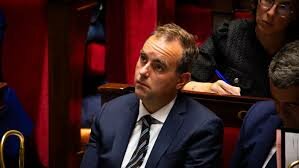
FR - Le président français Macron a nommé Michel Barnier comme nouveau Premier ministre, en fonction depuis le 5 septembre. Homme politique et ministre gaulliste, négociateur du Brexit, Barnier, 73 ans, a la lourde tâche de former un gouvernement d'union nationale qui exclut les perdants de la droite lépéniste et même les vainqueurs de gauche du Front populaire. Les prochaines semaines seront décisives pour comprendre comment sera gouverné le deuxième plus grand pays de la zone euro. La situation des finances publiques françaises représente le «défi le plus urgent». En 2023, le déficit de la France a augmenté jusqu'à 5,5 pour cent du PIB et c'est pour cette raison que le ministre sortant de l'Économie, Bruno Le Maire, a souligné à l'Assemblée nationale : «Nous ne pouvons pas nous permettre d'être la chemise noire de l'Union européenne et de la zone euro».


EN - French President Macron has appointed Michel Barnier as the new prime minister, taking office on September 5. A Gaullist politician and minister, Brexit negotiator, the 73-year-old Barnier has the difficult task of forming a government of national unity that excludes the right-wing Le Pen losers and even the left-wing winners of the Front Populair. The coming weeks will be crucial to understanding how the second country in the Eurozone will be governed.  The situation of French public finances represents the "most urgent challenge". In 2023, France's deficit increased to 5.5 percent of GDP and for this reason the outgoing Economy Minister Bruno Le Maire underlined to the National Assembly: "We cannot afford to be the black shirt of the European Union and the eurozone”.


IT - Il presidente francese Macron ha nominato Michel Barnier nuovo primo ministro, in carica dal cinque settembre.  Politico e ministro gollista, negoziatore della Brexit, il settantatreenne Barnier ha il difficile compito di formare un governo di unità nazionale che esclude i perdenti lepenisti di destra e persino le vincenti sinistre del Front Populair. Le prossime settimane saranno decisive per capire come sarà governato il secondo Paese dell'Eurozona.

La situazione delle finanze pubbliche francesi rappresenta la “sfida più urgente”. Nel 2023 il deficit della Francia è aumentato al 5,5 per cento del Pil e per questo il ministro dell'Economia uscente Bruno Le Maire ha sottolineato all'Assemblea nazionale: “Non ci si può permettere di essere tra due anni o tre anni la maglia nera dell'Unione europea e della zona euro”. 


staff @euroeconomie.it


facebook
instagram
twitter
linkedin
whatsapp
X

@2021-2023 EUROECONOMIES

WEBSITE CREATED BY Q DIGITALY

Create Website with flazio.com | Free and Easy Website Builder