.png "euroeconomie (10)")

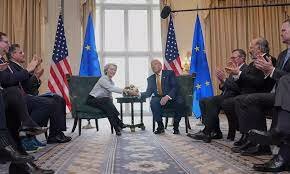
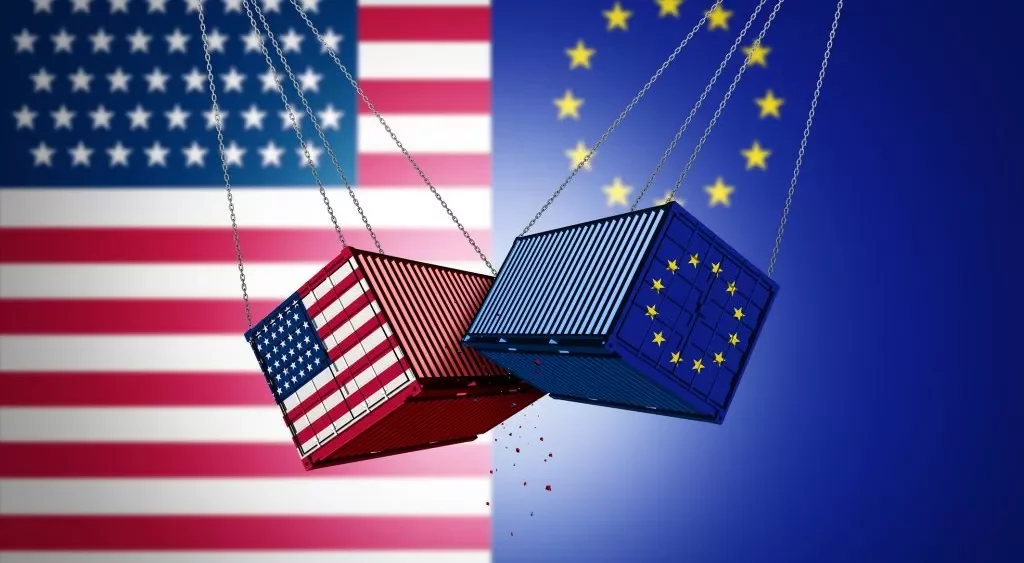
EU/ENG - In Scotland, on Sunday, July 27, US President Donald Trump and European Commission President Ursula von der Leyen reached an agreement on tariffs: the vast majority of European exports to the United States will be subject to a single tariff rate of 15%. Exemptions are provided for specific sectors such as certain generic drugs, some microprocessors, aeronautics and their components, certain chemical products, natural resources, and critical raw materials.
The European Union has also committed to purchasing approximately $750 billion in energy products from the US over the next three years, as well as supplies from the American military industry. The European commitment also covers investments in the United States worth approximately $600 billion. Under the agreement, the EU is shelving the two packages of countermeasures to the €92 billion tariffs set to kick in on August 7.
The US-EU agreement does not cover steel and aluminum, on which Washington has imposed a 50% tariff globally. For these goods, however, von der Leyen has indicated the possible introduction of a "quota system."
The exemptions, however, will concern more sensitive and technology-intensive sectors: so-called "strategic products," with a 0% tariff, will be exempt from duties. These include all aircraft and related components, the aerospace industry (a tacit non-aggression agreement between the Franco-European giant Airbus and the American Boeing), advanced robotics and industrial machinery, some chemical products, some generic drugs, semiconductor equipment, some agricultural products, natural resources, and essential raw materials. Liquor and alcohol could also be exempt.
ITA - In Scozia domenica 27 luglio il presidente degli Stati Uniti Donald Trump e la presidente della Commissione europea Ursula von der Leyen hanno raggiunto l'intesa sui dazi: per la stragrande maggioranza delle esportazioni europee negli Stati Uniti verrà applicata un'unica aliquota tariffaria del 15%. Sono previste delle esenzioni per comparti specifici quali alcuni farmaci generici, alcuni microprocessori, aeronautica e loro componenti, determinati prodotti chimici, risorse naturali, materie prime critiche.
L'Unione europea si è inoltre impegnata ad acquistare per i prossimi tre anni prodotti energetici dagli Usa per circa 750 miliardi e forniture dall'industria militare americana. L'impegno europeo riguarda anche investimenti negli Stati Uniti per circa 600 miliardi di dollari. In base all'accordo, l'Ue accantona i due pacchetti di contromisure ai dazi da 92 miliardi di euro pronti a scattare il 7 agosto.
L'accordo Usa-Ue non riguarda l'acciaio e l'alluminio sui quali Washington ha imposto il dazio del 50% a livello globale. Su queste merci, von der Leyen ha però indicato l'introduzione di un eventuale “sistema a quote”.
Le esenzioni, invece, riguarderanno settori più sensibili e ad alta intensità tecnologica: i cosiddetti “prodotti strategici”, con tariffa a 0%, saranno salvi dai dazi. Tra questi rientrano tutti gli aeromobili e i relativi componenti, l'industria aerospaziale (tacito accordo di non belligeranza tra il colosso franco-europeo Airbus e l'americana Boeing), robotica avanzata e macchinari industriali, alcuni prodotti chimici, alcuni farmaci generici, apparecchiature a semiconduttori, alcuni prodotti agricoli, risorse naturali e materie prime essenziali. Anche liquori e alcool potrebbero essere risparmiati.
analisti associati @euroeconomie.it *
* This contribution is not a journalistic article but an analytical brief - Questo contributo non è un articolo giornalistico ma un brief analitico